Brazil has what the world needs. Who is negotiating that wealth?
Beneath Brazilian soil lies the second-largest reserve of rare earths on the planet. The United States needs it to depend less on China. This investigation shows who is negotiating that access, and on whose behalf.
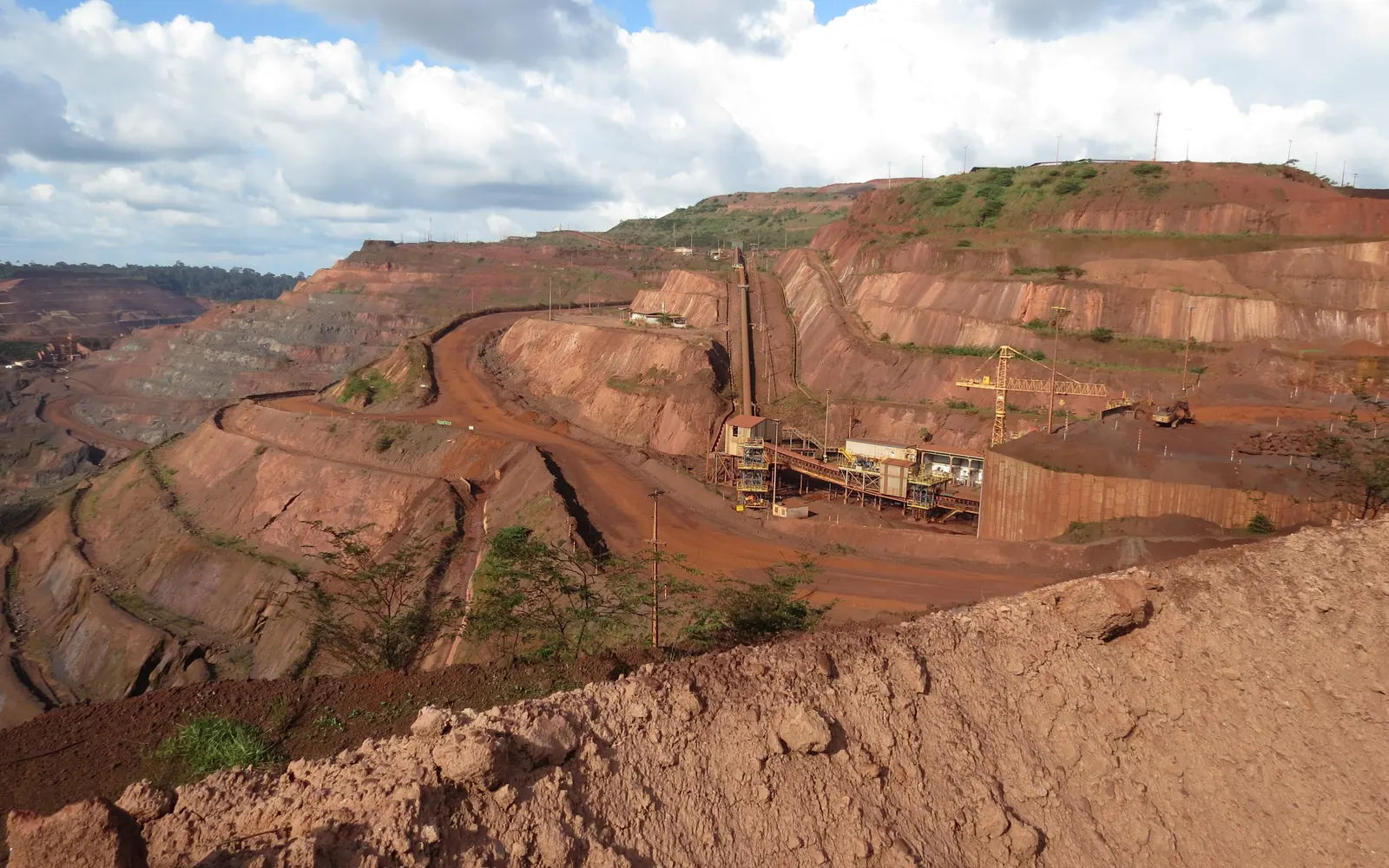
Carajás (PA), 2016. Photo: IsabeleC, CC BY-SA 4.0
1 of 4
Six minerals, one map
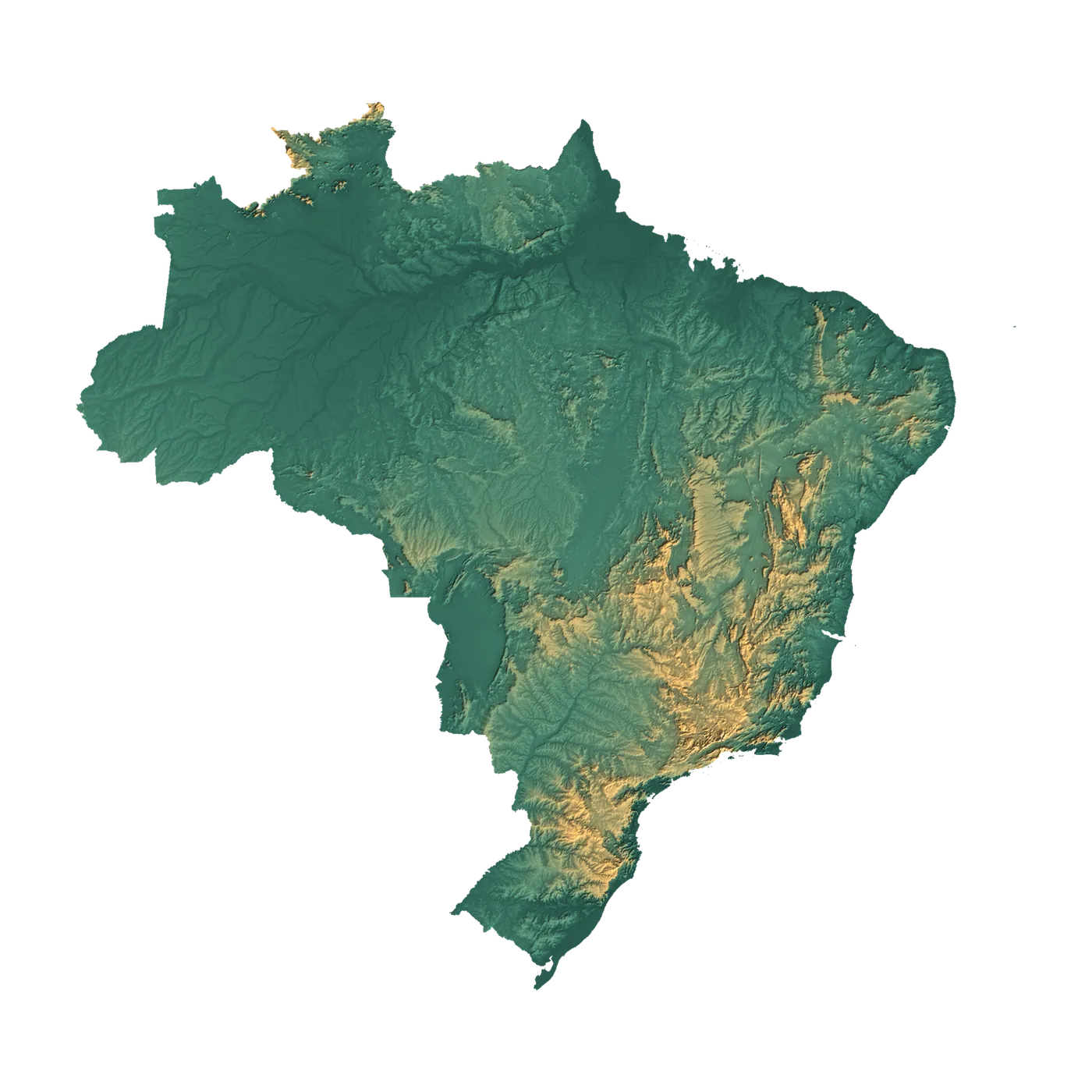
Niobium, rare earths, graphite, lithium, nickel and copper go into electric motors, batteries, turbines and weapons. Brazil has all of them. In two, it is a world power.
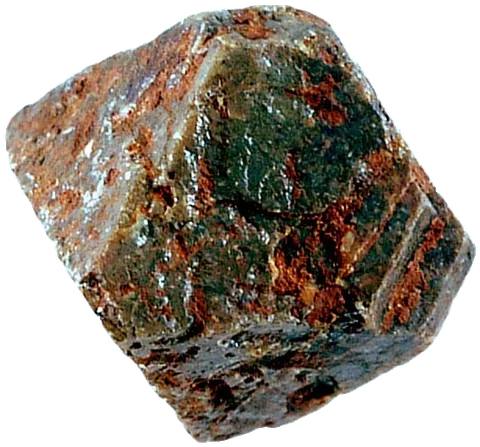
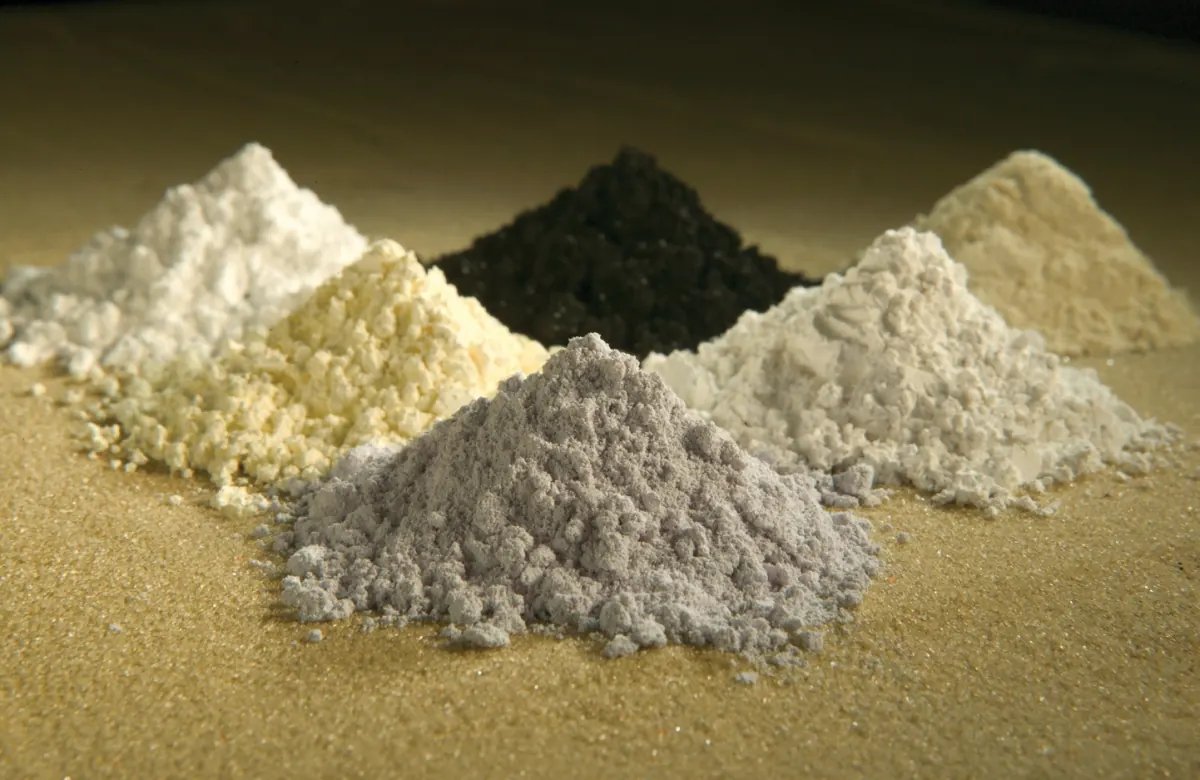
The dots mark municipalities with projects linked to each mineral. A solid dot means the link is confirmed by an attached source; a hollow dot and a dashed line mean the link is still being checked. The specimens in the photos are examples of each mineral, not Brazilian samples.
source attached being checked
Choose a mineral to see where it is found.
The figures come from the Mineral Commodity Summaries 2026, published by the US Geological Survey. Tap a mineral to see its uses, locations and source.
2 of 4
Having is not the same as producing
Brazil has the second-largest reserve of rare earths on the planet, yet produced about 0.5% of the world total in 2025. China holds half of the reserves and almost 70% of production. That gap is what everyone wants to exploit.
Share of the world rare-earth total
Reserve data source:
Reserves
China 52% 44 MtBrazil 25% 21 Mt
2025 production
China 69% 270,000 tBrazil 0.5% 2,000 t
ChinaBrazilOther countries
USGS reports “more than 85 million t” worldwide; percentages are approximate.
Reserves are what is estimated to be economically extractable. Production is what actually comes out of the mine. Processing is the chemical separation that turns ore into oxides and metals. At each stage the gap between Brazil and China widens. The two official sources still disagree on the size of the Brazilian reserve.
3 of 4
Both frontiers already have an American buyer
In northern Goiás, the country’s only commercial rare-earth mine passed into the hands of a US company in September. In southern Bahia, another US company has owned a mineral sands project since 2023.
Energy Fuels completes its purchase of the mineral sands project in southern Bahia.
USA Rare Earth announces its purchase of Serra Verde, in Minaçu (GO).
The purchase is completed, for about US$ 2.8 billion.
President Lula signs into law the National Policy on Critical and Strategic Minerals.
The highlighted municipalities come from the boundary maps of IBGE, Brazil’s national statistics agency. The dates below have been confirmed in documents and press reports; figures and details still pending are flagged in the evidence panel.
4 of 4
Who is negotiating that wealth?
From here on we follow the thread: from what is inside your phone to the contest between the US and China, from the 50% tariff to the people who offered themselves as a bridge in Washington, from the funds already on the ground to the choices Brazil can still make.
Each chapter separates what is proven fact, what is public statement, what is allegation not yet proven and what is our own interpretation. Everyone named has their response on record. When something changes, the page logs the update.
The race for what lies beneath Brazil begins with an object that fits in your pocket.
Li-ion
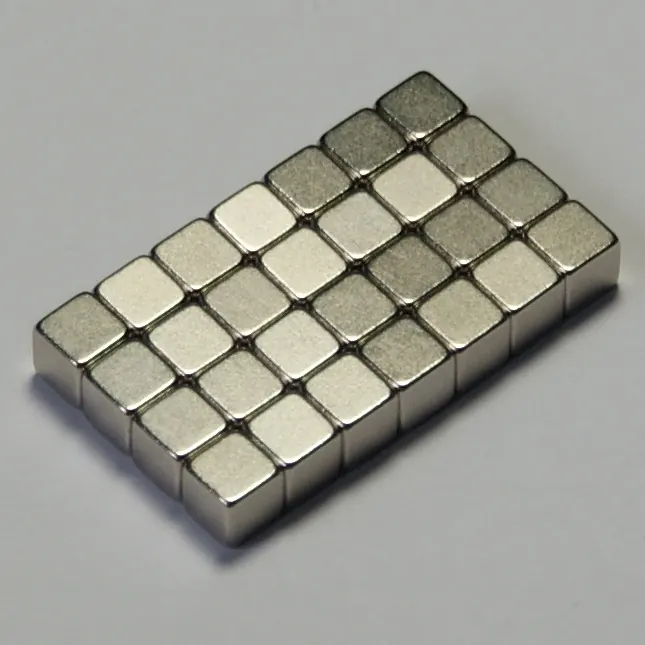
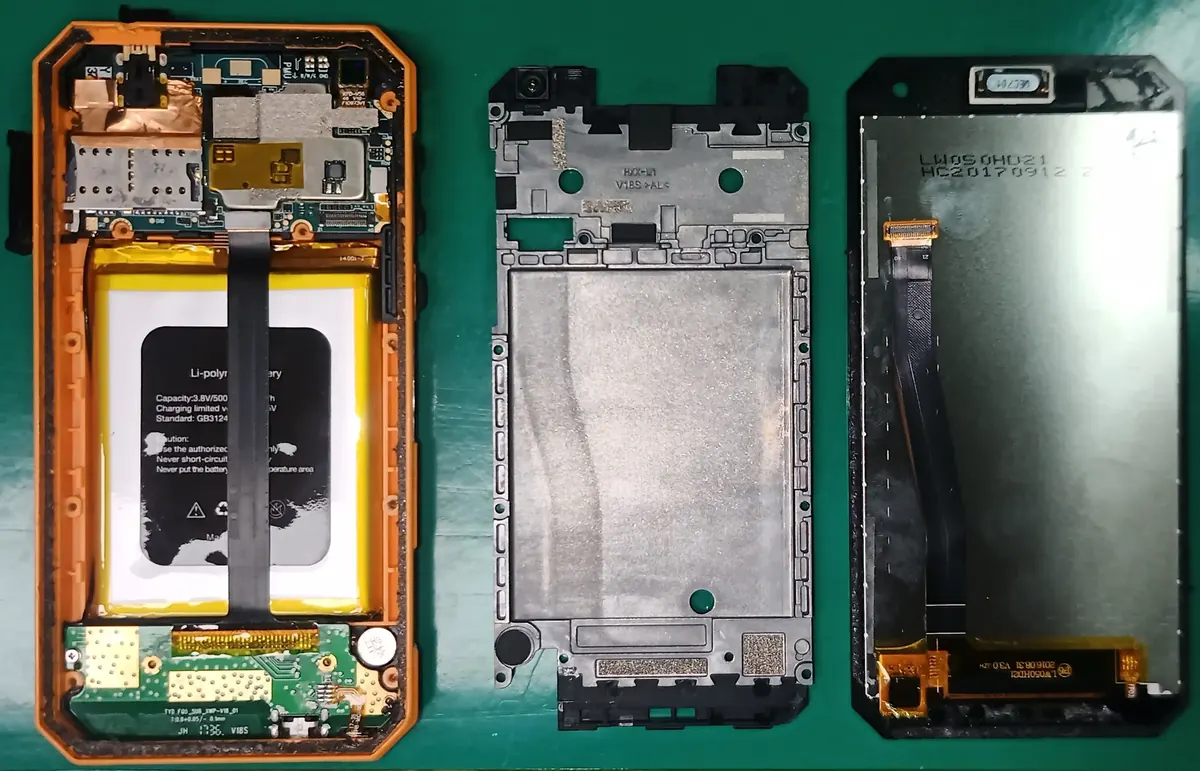
Neodymium magnets; neodymium is one of the rare earths. Photo: Wikimedia Commons, CC BY 3.0A real phone, taken apart. Photo: DungeonLords, CC BY-SA 4.0
93%
of the niobium produced worldwide in 2025 came from Brazil. 104,000 of 112,000 tonnes.
Brazil Rest of the world Each square = 1 kg in every 100 kg. Source: USGS, 2026.
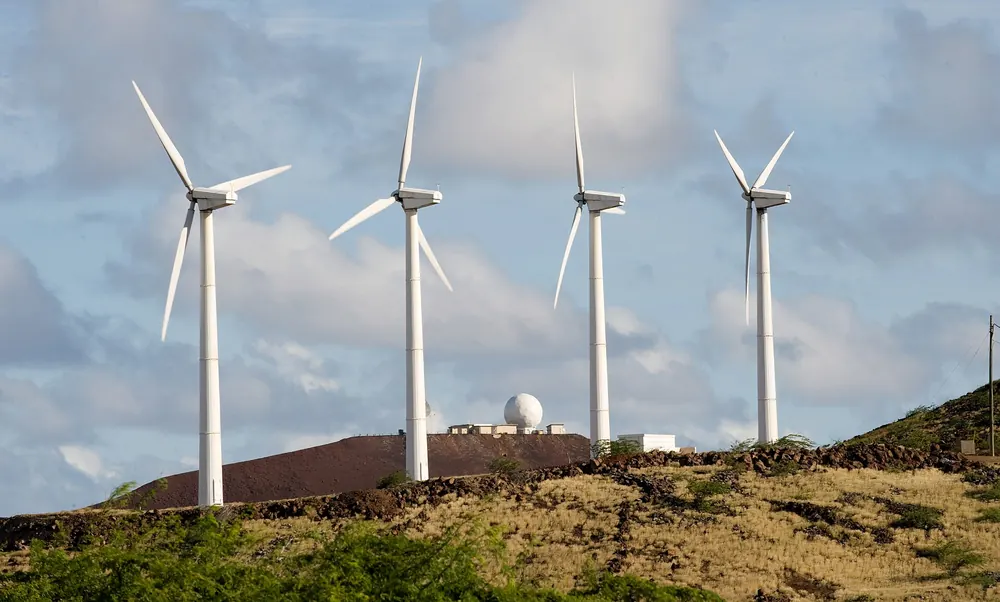
Towers and turbines: high-strength steel. Photo: US Air Force, public domain
Stronger, lighter steel with just a few grams of niobium per tonne
Gas pipelines, bridges, transmission towers and cars
Aircraft turbines and high-temperature alloys
Pick up the phone in your hand
It looks like an object of glass and metal. Inside, it is a small map of global mining: dozens of chemical elements from mines scattered across the planet.
Five layers, dozens of elements
Screen, circuit board, battery, components and casing. Each layer depends on different minerals, and some of them lie beneath Brazilian soil.
The magnet that makes your phone vibrate
The speaker, the microphone and the vibration motor use tiny magnets made from rare earths such as neodymium and praseodymium. They are the same magnets that drive electric cars, wind turbines and guided missiles, only much larger.
The battery: lithium, graphite and nickel
Lithium carries the charge. Graphite forms the anode, the negative terminal. Nickel goes into the cathode of several battery chemistries. Brazil has the 2nd-largest graphite reserves and the 3rd-largest nickel reserves among the countries listed by the USGS.
Battery chemistry varies. Phone batteries generally use cobalt-based cathodes; electric-car batteries often use nickel, manganese and cobalt, or iron and phosphate. Graphite is in practically all of them.
The circuits: copper
Copper traces carry current and heat across the whole board. Silicon, silver and tungsten complete the chips and connections.
And niobium?
There is almost none in your phone. It is in the high-strength steel of the transmission towers, gas pipelines and turbines that keep your phone running. Of every 100 kg of niobium produced worldwide in 2025, 93 came from Brazil.
Chapter 3
Why Brazil became a target
Reserves, production and refining tell three different stories. In all of them, Brazil is the alternative the US lacks.
Hover over or tap a country
lessmore
Colour and circles proportional to reserves, in tonnes of oxides. Source: USGS, 2026.
Mining60%
Refining and separation91%
Permanent magnets94%
1/4
Who has it
Rare earth reserves are concentrated in two countries. China has 44 million tonnes; Brazil, 21 million. The next ten combined hold less than Brazil.
2/4
Who digs it up
Production tells a different story. In 2025 China mined 270,000 tonnes; the US, 51,000; Brazil, about 2,000. The world’s second-largest reserve is still almost entirely in the ground.
3/4
Who processes it
The real bottleneck comes after the mine. China refines 91% of the world’s magnet rare earths and makes 94% of the magnets. Whoever controls that stage controls the entire chain.
4/4
Who depends on it
In 2025 China restricted exports of seven rare earths used in magnets and weapons. The US buys 71% of the rare earth compounds and metals it imports from China. Washington needs another source, and only one country has the reserves for it.
Rare earth reserves by country
Brazil according to:
China44
Brazil21
Australia6.3
Russia3.8
Vietnam3.5
US1.9
Greenland1.5
Tanzania0.89
South Africa0.86
Canada0.83
Malaysia0.71
Millions of tonnes of rare earth oxides. India, Myanmar and Thailand have no reserves published by the USGS in 2026. World: more than 85 million t (USGS).
Three words not to confuse
Reserve
What geological studies estimate can be extracted profitably today.
Production
What actually comes out of the mine in a year.
Processing
The chemical separation that turns ore into oxides and metals, and then into magnets.
The IEA estimates that, even with every announced project outside China, by 2035 that capacity would cover about half of mining demand, 25% of refining demand and less than 20% of magnet demand. China is the leading refiner of 19 of the 20 strategic energy minerals the agency analysed.
Verified fact
China is the leading refiner of 19 of the 20 strategic energy minerals analysed by the IEA, with an average share of about 70%.
Chapter 4
Pressure, ally, deal
In four countries, in less than two years, the sequence was similar. In Brazil, the first two stages have already happened.
The pattern
White House, public domain
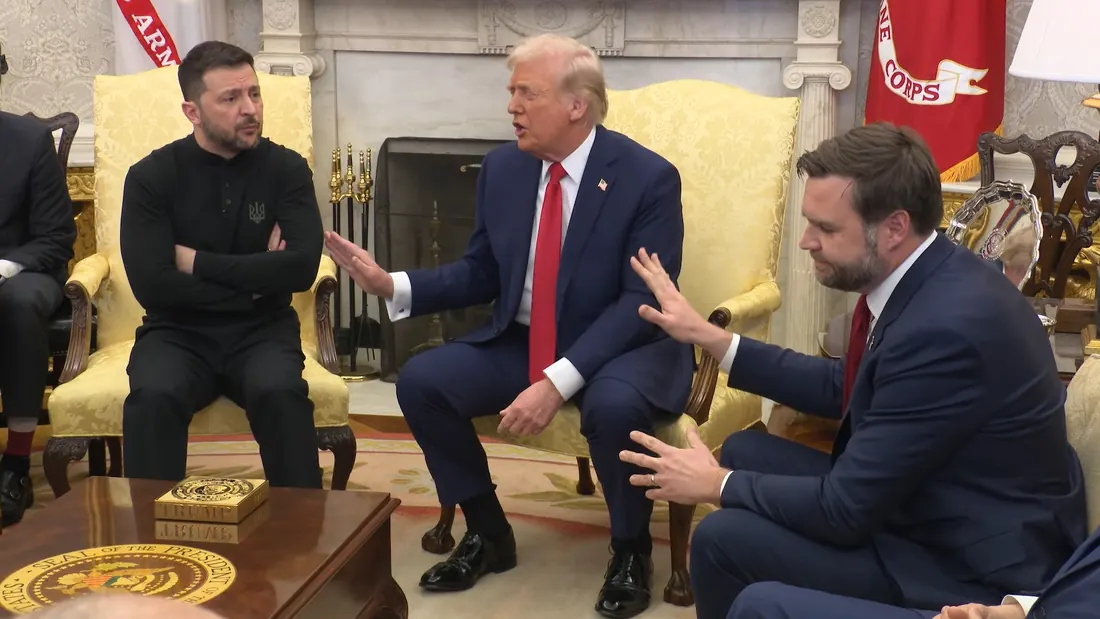
Ukraine
Pressure
An Oval Office row with Zelensky, whose country depends on American weapons.
Deal
Half of the revenue from new mineral, oil and gas licences goes into a fund shared with the US.
White House, public domain
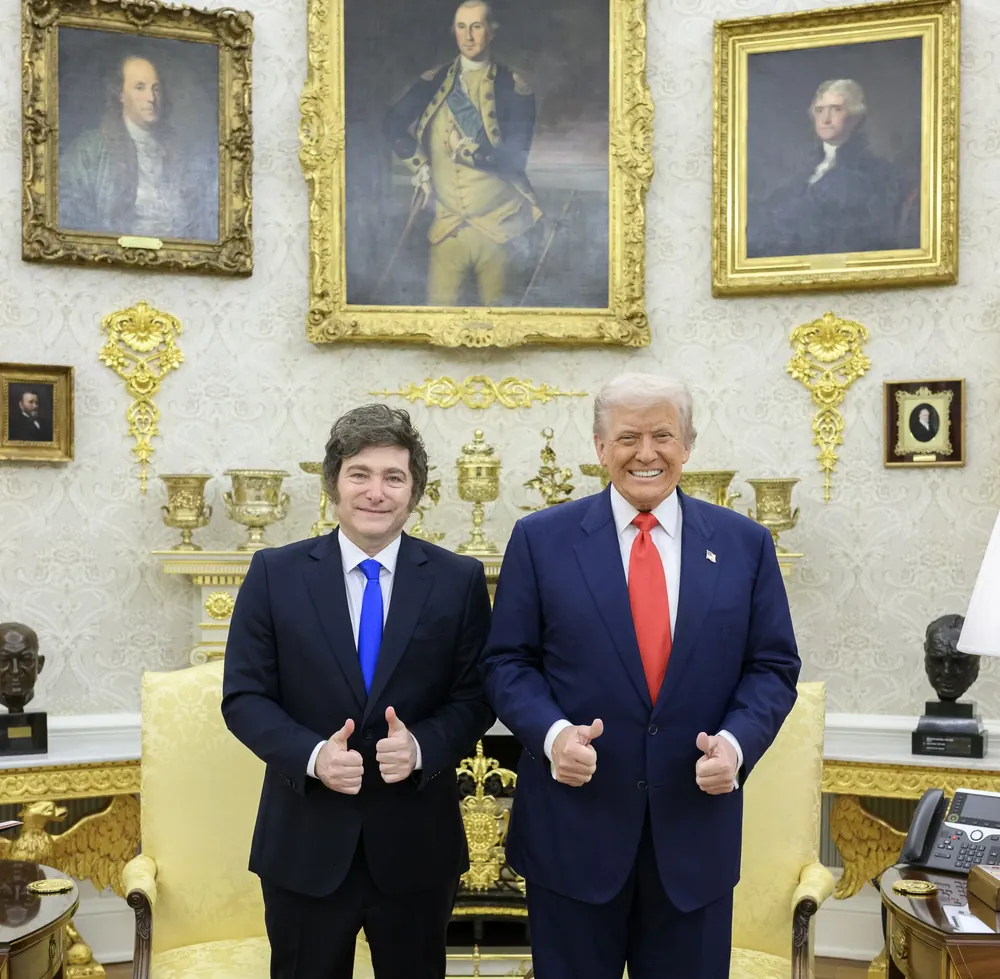
Argentina
Pressure
“If he loses, we are not going to be generous with Argentina,” Trump says before the election. A US$ 20 billion currency swap.
Deal
A framework agreement on critical-mineral supply is signed in Washington.
Government of Venezuela, public domain
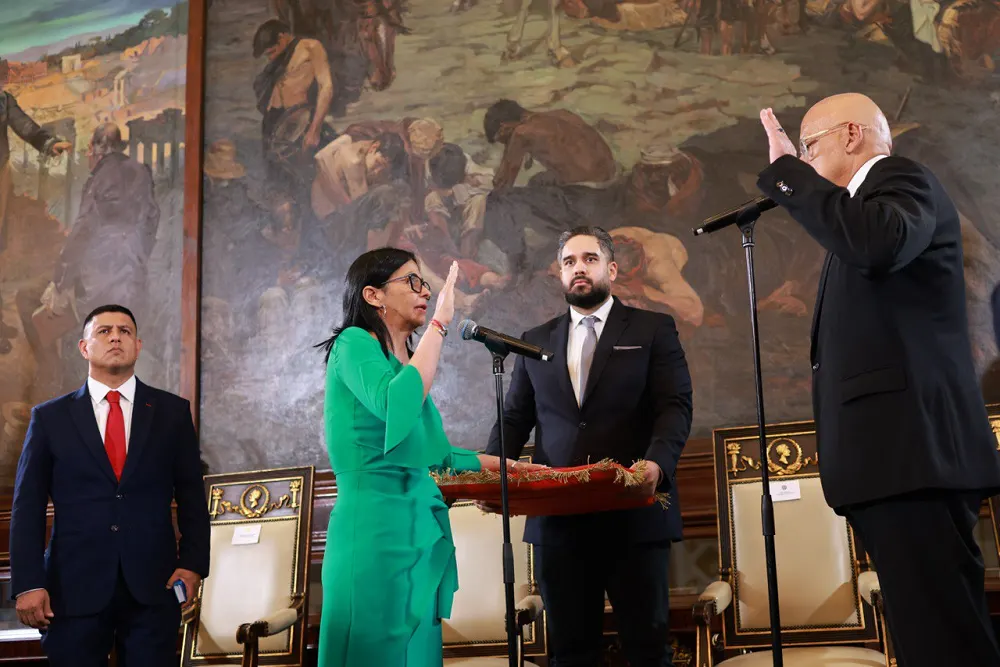
Venezuela
Pressure
US forces capture Nicolás Maduro in Caracas. Delcy Rodríguez takes over.
Deal
17 oilfields, a 100-year concession, a 35% stake and a veto for the US, and 20% of output at cost price.
US State Department, public domain
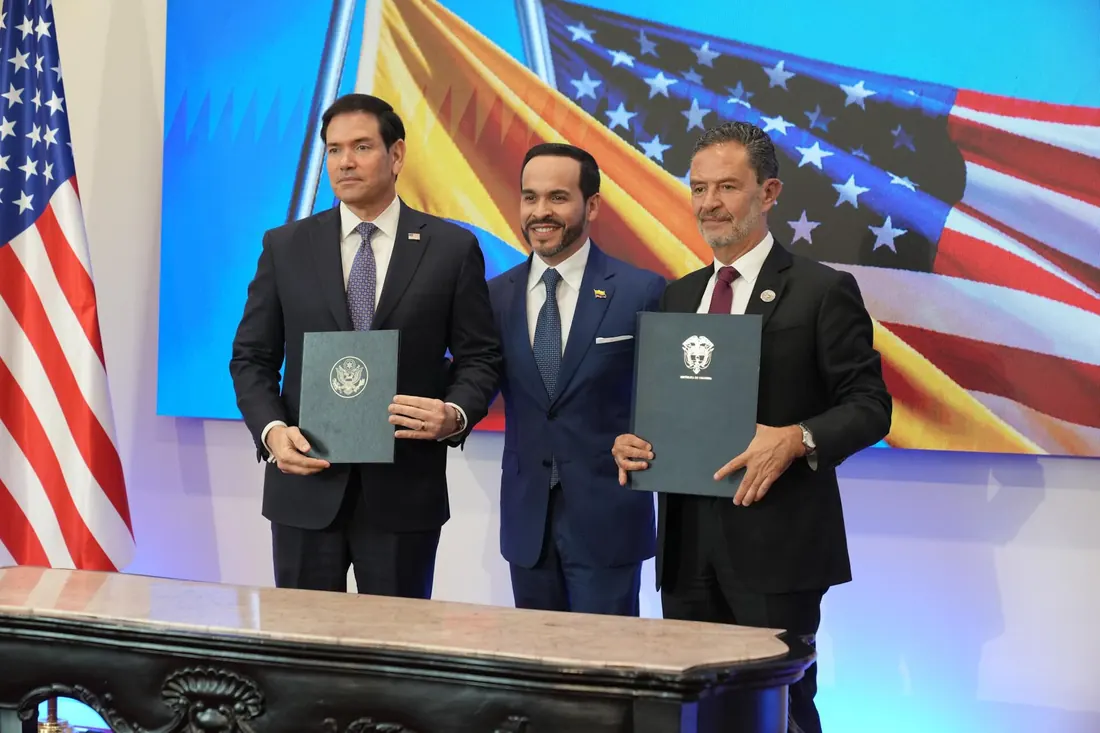
Colombia
Ally
Abelardo de la Espriella, an avowed Trump ally, takes office.
Deal
In Barranquilla, Rubio signs agreements on critical minerals and nuclear energy.
Interpretation
First comes the pressure. Then a government that owes Washington something. Finally, the deal that opens up natural resources to the US.
This is an interpretation. Each case has its own causes, and minerals agreements are also signed by countries under no pressure at all.
Argentina signed its agreement alongside ten other countries, at a meeting attended by 54 delegations. Ukraine was already negotiating its deal before the Oval Office row. The pattern describes an observed sequence; it does not prove intent.
And Brazil?
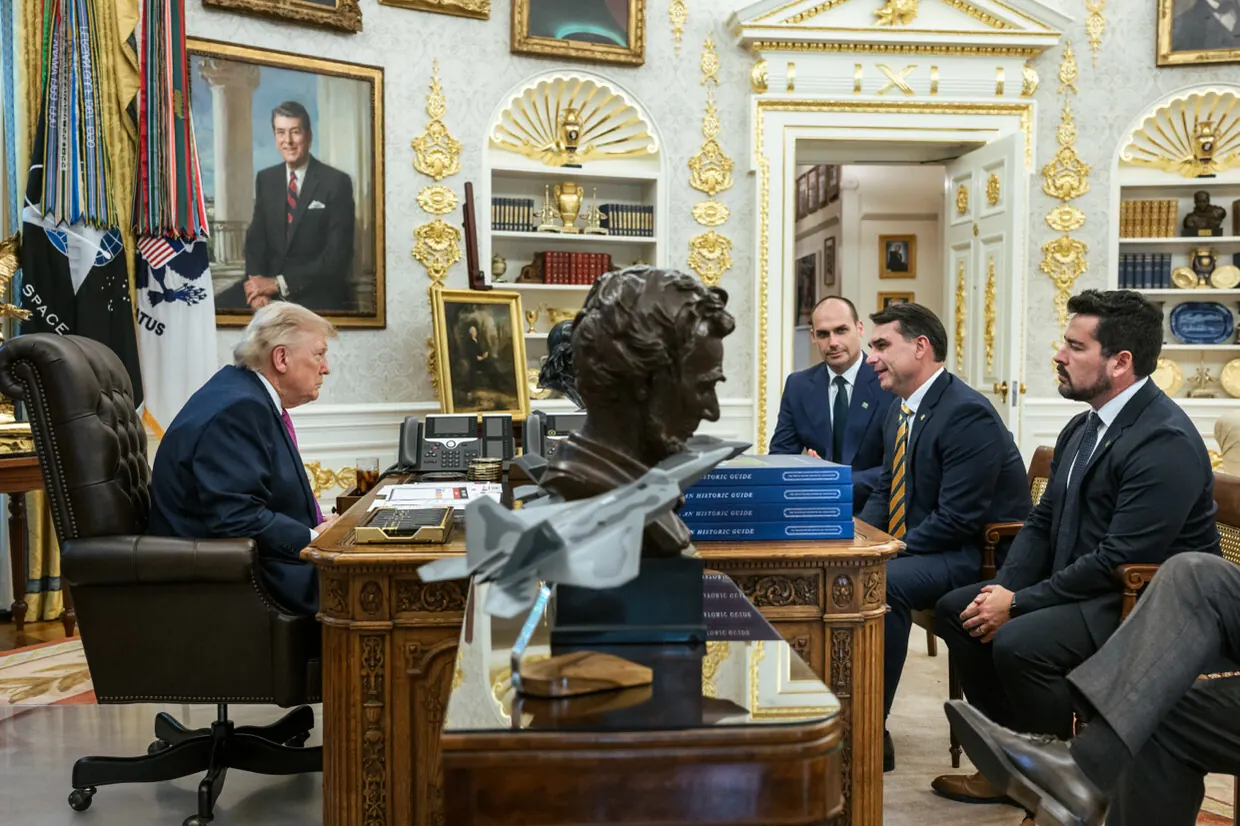
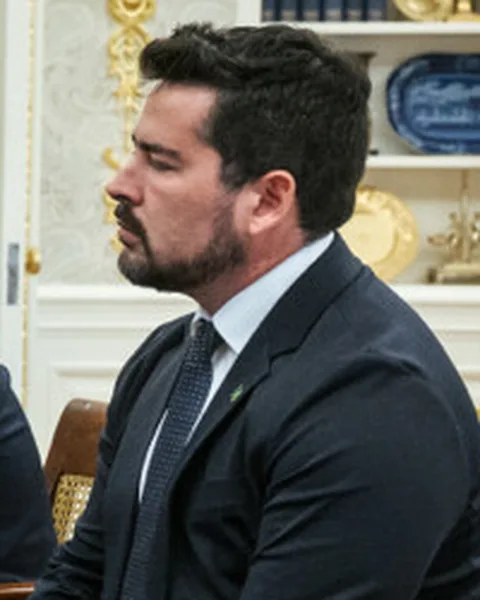
Oval Office, May 2026. Trump receives Flávio Bolsonaro. According to the caption of the image Trump posted, Eduardo Bolsonaro and Paulo Figueiredo are also in the room.Photo posted on Donald Trump’s Truth Social account; public domain (Wikimedia Commons).
US pressureAllies in BrazilBrazilian institutions
Allies in Brazil
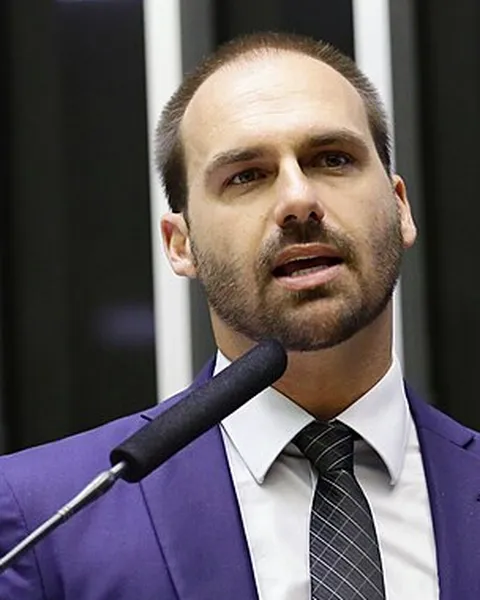
Eduardo Bolsonaro, still a member of Congress, moves to the US and begins lobbying for sanctions against Brazilian officials.
Verified
US pressure
Trump declares a national emergency over Brazil and raises the tariff to 50%. The official text names Jair Bolsonaro and Paulo Figueiredo.
Verified
US pressure
The US hands over 21 demands. They include advance notice of any sale of critical-mineral assets and limits on Chinese investment in mining.
Verified
Brazilian institutions
The Chamber of Deputies, Brazil’s lower house, strips Eduardo of his seat for absences.
Verified
Allies in Brazil
At CPAC in Texas, Flávio Bolsonaro pitches Brazil as “America’s solution” to reducing dependence on China for critical minerals.
Statement
Allies in Brazil
Flávio is received in the Oval Office, together with Eduardo and Paulo Figueiredo. The same month, Rockbridge Brazil LLC is set up, managed by an aide to JD Vance.
Verified
Brazilian institutions
The STF, Brazil’s Supreme Court, convicts Eduardo of coercion in the course of legal proceedings: he used US sanctions to pressure its justices.
Verified
US pressure
USA Rare Earth, with US government money in its supply chain, takes over Brazil’s only commercial rare-earth mine.
Verified
Brazilian institutions
Lula signs the National Critical Minerals Policy into law: a council attached to the presidency can approve corporate transactions in the sector.
Verified
Brazilian institutions
The list of demands becomes public. Lula: “unacceptable”.
Verified
Allies in Brazil
Renan Santos accuses Rockbridge of funding Flávio’s campaign. The campaign denies it; there is no evidence of any transfer.
Allegation
Brazilian institutions
Flávio Bolsonaro (47.05%) and Lula (45.13%) go through to the run-off on 25 October.
Verified
What those named say
Flávio Bolsonaro frames the election as a choice between a Brazil allied with the US in the hemisphere and a Brazil aligned with America’s adversaries. His campaign denies receiving foreign funds.
Pedro Sang acknowledges a link to Rockbridge and denies brokering funds.
André Marinho admits writing the minerals memo and meeting JD Vance. He says they discussed organised crime and that he did not present the text to any US official.
Rockbridge says it has no official branch in Brazil and claims to have been the victim of forged documents.
Paulo Figueiredo says he is a private citizen, that his properties are mortgaged and that the penalty imposed on him was unwarranted.
The Lula government rejected the list of demands and says it welcomes foreign companies provided processing is done in Brazil.
Statement
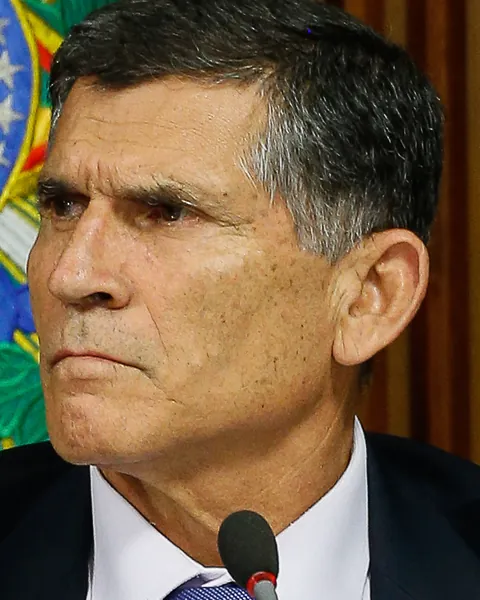
In an interview with Bruno Torturra’s programme Revelando, published on 16 October 2026, retired general Carlos Alberto Santos Cruz, a former minister under Bolsonaro, called the stance of Brazilian politicians towards the US “voluntary submission” and described the photo of Flávio Bolsonaro beside Trump in the Oval Office as a “subordinate’s position”. “Seeking interference is treason,” he said.
Chapter 5
Who’s who
Nine people appear in this story. For each: their position as of today, their documented role and the status of every claim.
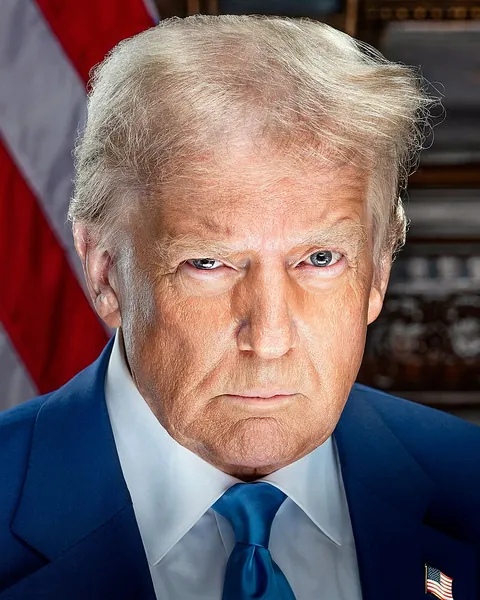
Donald Trump
US president since January 2025
Signed the order that raised the tariff on Brazil to 50%. Received Flávio Bolsonaro in the Oval Office.
Photo: Daniel Torok / White House, public domain
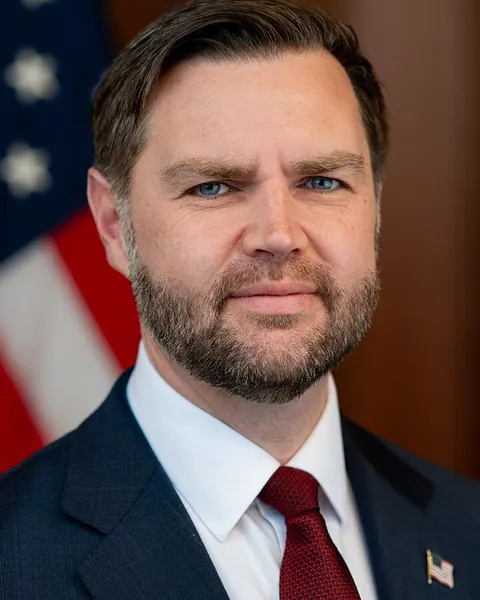
JD Vance
US vice president
Co-founder of the Rockbridge Network. One of his aides manages Rockbridge Brazil LLC.
Photo: Emily J. Higgins / White House, public domain
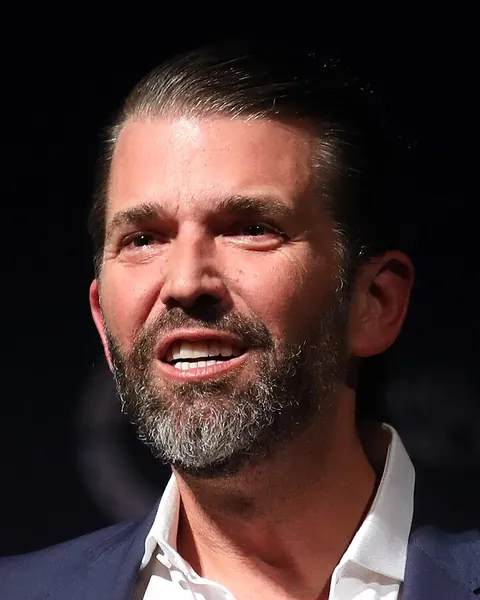
Donald Trump Jr.
Businessman; partner at 1789 Capital
Partner in the fund that invested in Vulcan Elements, a partner of the company that owns the project in southern Bahia.
Photo: Gage Skidmore, CC BY-SA 2.0
Eduardo Bolsonaro
Former federal congressman; stripped of his seat in Dec. 2025
Moved to the US and lobbied for sanctions against Brazilian officials. Convicted of coercion by the First Panel of the STF, Brazil’s Supreme Court.
Photo: Michel Jesus / Chamber of Deputies, CC BY 3.0
Paulo Figueiredo
Political commentator; lives in the US
Named in Trump’s executive order. Was in the Oval Office with Flávio and Eduardo. Owes R$ 4.9 million to the Brazilian federal government, which he disputes.
Photo: crop of a photo posted by Donald Trump, public domain
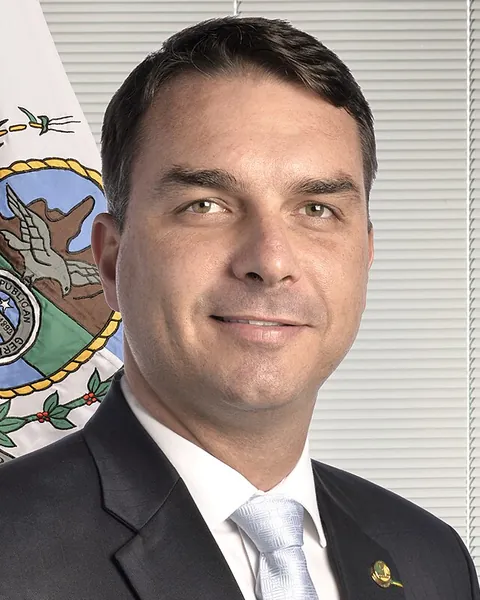
Flávio Bolsonaro
Senator (PL, Rio de Janeiro); presidential candidate in the run-off
Pitched Brazil at CPAC as “America’s solution” on critical minerals. Faces the run-off on 25 October.
Photo: Agência Senado (Senate news agency)
André Marinho
Broadcaster; former Novo party candidate for governor of Rio de Janeiro (0.52%)
Author of the “Prosperity Partnership” memo on critical minerals and rare earths.
Photo: TSE (Superior Electoral Court), CC BY 4.0
Pedro Sang
Businessman
Works at Flávio’s campaign office in São Paulo and introduces himself as “Pedro from Rockbridge”.
Photo: reproduction; author and licence to be confirmed
Carlos Alberto Santos Cruz
Retired general; former minister of the Government Secretariat (2019)
A right-wing military man who criticises Brazilian politicians’ courting of Trump.
Photo: Isac Nóbrega / Brazilian Presidency, CC BY 2.0
Positions verified on 17 October 2026. Appearing on this list does not imply wrongdoing. Each claim carries its status and, where one exists, the response of the person named.
Chapter 6
Follow the money
Pull any thread in this network and it ends at the ore. Only the threads backed by documents are shown here.
Pull a thread:
Ownership or control
Investment or credit
Contract or memorandum
Report or statement
Allegation without proof
Money in motion
Only links with a published source are shown. A line does not indicate wrongdoing.
From Trump’s son to Bahia
Donald Trump Jr. is a partner at 1789 Capital. In August 2025 the fund invested in Vulcan Elements, a magnet maker that three months later received US$ 620 million from the Pentagon. That same month, Vulcan signed a memorandum with Energy Fuels, which since 2023 has owned 17 concessions of monazite-bearing sands in southern Bahia.
Interpretation These links are public and indirect. The memorandum does not cover the Brazilian project, and there is no record of Trump Jr.’s money being invested in Bahia.
From Trump’s VP to the campaign
JD Vance founded the Rockbridge Network in 2019. In May 2026 a Rockbridge Brazil LLC appeared, managed by one of his aides. Pedro Sang, who introduces himself as “Pedro da Rockbridge”, works at Flávio Bolsonaro’s campaign office in São Paulo.
Allegation So far there is no proof for the allegation that Rockbridge funded the campaign. Rockbridge denies having a branch in Brazil; Sang denies brokering funds.
US public money
The US government is not only present in politics. The Pentagon lent US$ 620 million to Vulcan. The DFC, the US public development bank, financed Serra Verde with US$ 565 million, and a vehicle backed by US$ 750 million from the Department of War bought 15 years of phase 1 output from the mine in Goiás.
Serra Verde (Minaçu, Goiás state): US$ 565 million in financing from the DFC, a US government development bank (Feb 2026); purchase of phase 1 output for 15 years by a vehicle with US$ 750 million from the Department of War; since 4 September 2026, controlled by USA Rare Earth.
Chapter 7
Where the subsoil already has an owner
The contest has an address: three municipalities on the coast of Bahia and a town in northern Goiás.
Municipal boundaries: IBGE. The exact area of the concessions is not yet drawn: it depends on checking the filings in SIGMINE, the database of Brazil’s National Mining Agency (ANM).
Southern Bahia: sand worth more than the beach
Between Prado, Alcobaça and Caravelas, the coastal sands are rich in heavy minerals: monazite, which contains rare earths and uranium, plus ilmenite, rutile and zircon. In 2023 the US company Energy Fuels bought 17 concessions in the area.
Owner
Energy Fuels (US), since 10 Feb 2023
Asset
17 concessions of heavy-mineral sands
Announced price
US$ 27.5 million
Status
Awaiting permits; the monazite is set to feed the company’s mill in Utah
Verified fact
10 February 2023: Energy Fuels completes the purchase of the Bahia Project, 17 heavy mineral sands concessions (monazite, ilmenite, rutile and zircon) in southern Bahia state, announced at US$ 27.5 million.
The transcript that prompted this investigation mentions 19 active filings with the ANM in Prado, Caravelas and Alcobaça. That number has not yet been verified. Protected areas, traditional communities and fishing grounds overlapping the concessions also still need to be mapped. The company’s 10-K cites the risk that new protected areas could be created.
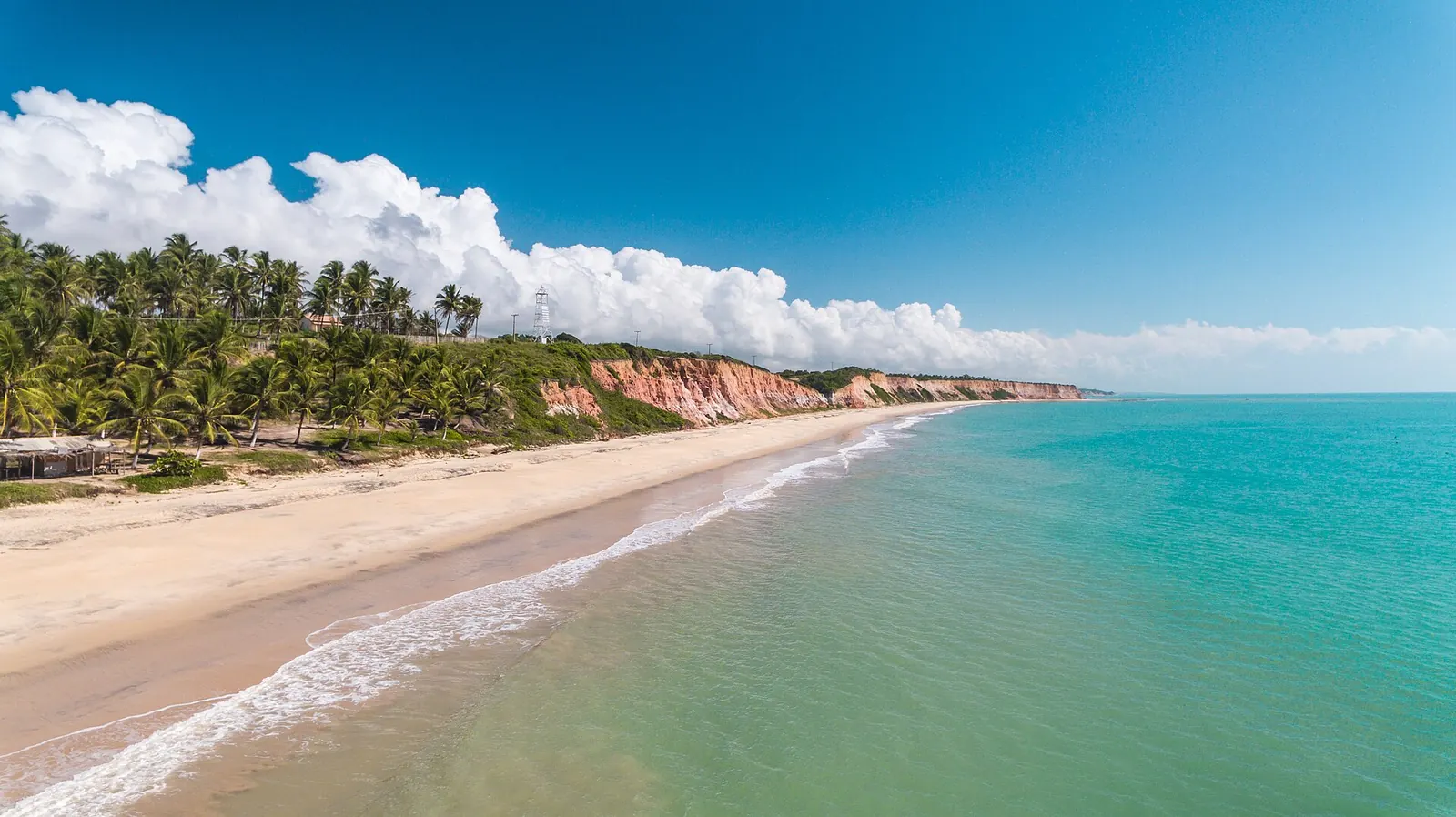
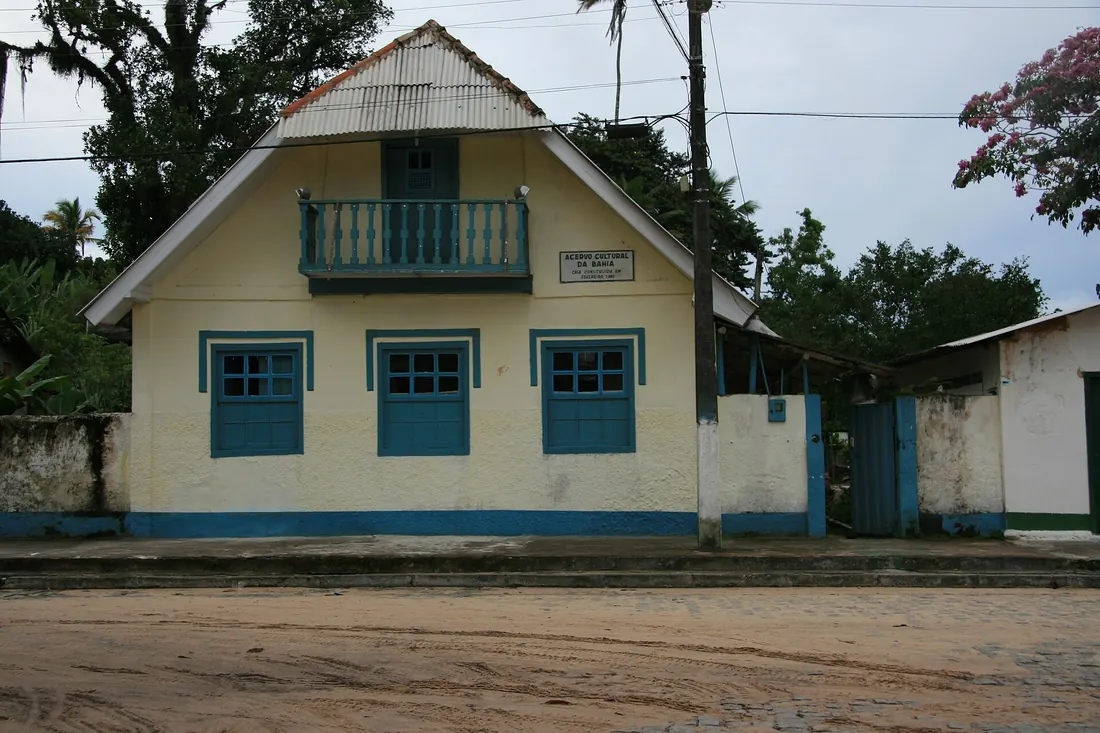
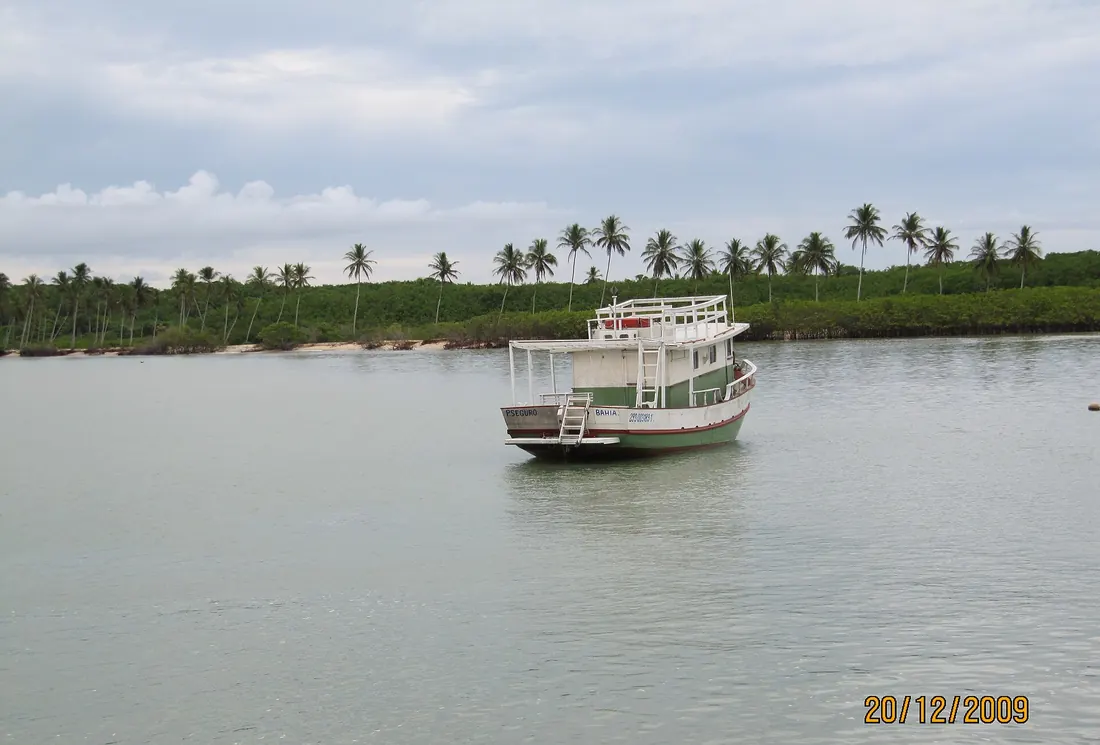
Praia do Farol, Prado. Photo: Márcio Filho/MTur, public domainBarra de Caravelas. Photo: Vilamir Azevedo, CC BY-SA 3.0Alcobaça. Photo: Andrevruas, CC BY 3.0
Chapter 8
What Brazil does with it
The ore doesn’t move. What gets decided is where it becomes value, and who decides.
1MineRaw orein Brazil
2Ore processingConcentratein Brazil
3Chemical separationOxides of each elementin Brazil
Separate the elements and produce oxides and metals here. It is the stage where China holds 91% of the world, and the one the new law tries to bring into the country.
What stays in Brazil
Skilled jobs in chemistry and metallurgy
More value per tonne exported
Bargaining power: what the world lacks is refining, not ore
What it costs
Expensive plants that take years to mature
Energy, water and reagents on a large scale
Tailings with thorium and uranium, in the case of monazite
Qualitative scenarios. Job and revenue figures depend on studies not yet published for the Brazilian projects; we do not estimate numbers here.
Rare earth oxides, the product of chemical separation. Photo: Peggy Greb/USDA, public domain
The September law’s bet
Verified fact
The National Policy on Critical and Strategic Minerals (16 September 2026) creates a council attached to the Presidency, the Cimce, which can approve corporate transactions in projects in the sector and must draw up a national plan for processing, refining and industrialisation in the country.
Statement
Lula says he does not oppose foreign companies mining minerals in Brazil, provided that the processing and production of the final product also take place in the country.
Business groups and free-market economists criticize the new council’s power to approve corporate transactions, which they see as creating uncertainty for investors. The government replies that the goal is to move Brazil beyond being a mere commodity exporter.
Sovereignty and sustainability
Environmental
Biomes, water, tailings, land restoration. At Serra Verde, Goiás’s environmental agency (Semad-GO) has already fined the company for deforestation.
Social
The people of Prado, Caravelas, Alcobaça and Minaçu: fishers, traditional communities, workers. Prior consultation is an obligation, not a favour.
Economic
How much of the value stays in the country, how much goes to royalties, how much becomes industry. The IEA puts the investment needed over the next decade to diversify the chain outside China at US$ 60 billion.
Sovereignty
Who decides on the sale of a strategic mine. The new policy creates a council attached to the Presidency that can approve corporate transactions in the sector.
Pulling the thread
Do the math.
21 million
tonnes
of rare earths beneath Brazilian soil. The second-largest reserve on the planet.
2,000
tonnes
is what Brazil dug out of the ground in 2025. China dug out 270,000.
91%
of the refining
of rare earths for magnets happens in China. That is where ore turns into money.
1
mine
producing rare earths commercially in Brazil. Since 4 September, it has had an American owner. Its output already has a buyer for 15 years, backed by money from the US Department of War.
17
concessions
on the southern coast of Bahia. Owner: an American company, since 2023.
50%
tariff
on Brazil. In the official text justifying it: the name of a Brazilian who lives in Florida.
21
demands
delivered by Washington. One of them: notify the US before selling any critical-minerals asset.
The ore doesn’t move.
The value does.
And with it, the decision.
Two projects are competing over this wealth. In each side’s own words:
“Brazil is America’s solution to break dependence on China in critical minerals.”
Foreign companies can mine, as long as the processing and the final product are done in Brazil.
The numbers on this page are sourced facts. The punchlines and the closing are this investigation’s reading.